Breaking News — A new open-source DIY filament dryer design promises to solve a persistent problem in 3D printing: keeping hygroscopic filament dry and ready for use. The V2 version, developed by Saša Karanović, features a custom PCB and a comprehensive GitHub project, making it accessible to makers worldwide.
"The response from the community after my first attempt was overwhelming," said Karanović in a statement. "People wanted a build that was truly DIY from the ground up, with clear documentation and a reliable controller. That's what V2 delivers."
Core Design and Components
At its heart, the dryer uses a common 5-liter food storage container as the drying chamber. Key electronics include an SHT30 temperature and humidity sensor, a 100K NTC thermistor, and a 12V polyimide resistive heater. The custom controller board manages these components, switching the heater on and off to maintain optimal conditions.
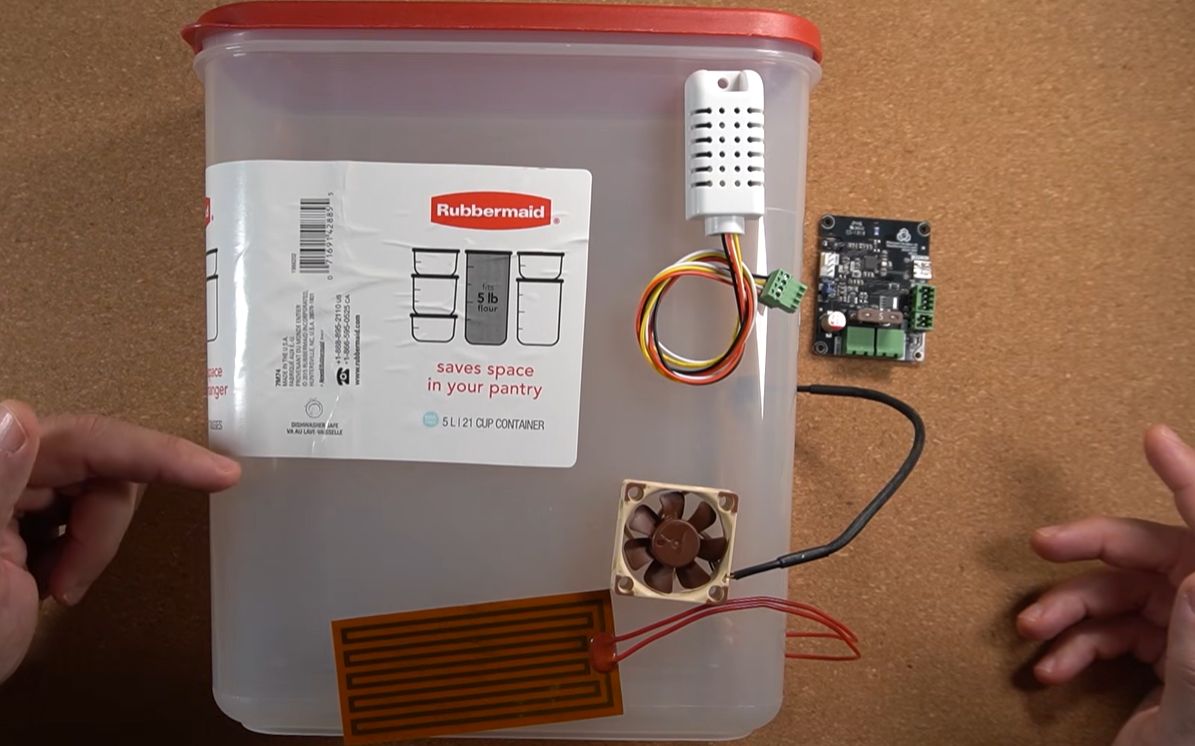
All assembly instructions and the bill of materials (BOM) are available on the project's GitHub repository. Karanović emphasizes that the design is modular, allowing users to source parts locally and adapt the enclosure.
Critical Issue: Moist Air Removal
One common flaw in many filament dryers is the lack of ventilation. "Warm, saturated air has nowhere to escape, which limits drying efficiency," explains Karanović. He notes that even commercial dryers like Sunlu recommend leaving the lid slightly ajar to allow moist air to be replaced by cooler, dry air.
While V2 does not include a built-in ventilation system, the design accounts for this by suggesting a simple — leave the container unsealed during operation. Future iterations may integrate a fan or dehumidifier, but for now, the focus is on reliable, low-cost control.
Background
Karanović originally shared a V1 version two years ago, which repurposed an existing filament dryer with a custom controller. That design drew criticism for being "not fully DIY." Feedback pushed him to create a completely homebrewed solution. V2 is the result: a fully documented, PCB-based system anyone can build.
The project fills a gap in the 3D printing community, where off-the-shelf dryers can cost $50–$100 and often underperform. DIY options have existed, but few offer the combination of sensor accuracy, heater control, and open-source documentation that V2 provides.
What This Means
For hobbyists and professionals alike, this design lowers the barrier to effective filament drying. The total cost of parts is under $30, and the open-source nature allows for customization. "Anyone with basic soldering skills can now build a dryer that performs as well as commercial models," says Karanović.
This development could reduce print failures caused by moisture, particularly with materials like nylon, PETG, and PLA. As 3D printing expands into production environments, reliable drying becomes crucial. The V2 design is a step toward democratizing that reliability.
GitHub Repository and Next Steps
The complete project files, including schematics, PCB layout, and firmware, are hosted on GitHub. Karanović encourages contributors to submit improvements, especially regarding ventilation and energy efficiency. A community forum is also being planned.
For those eager to build, the documentation includes step-by-step instructions, 3D-printed case files, and a test protocol to calibrate the dryer. Early adopters report consistent results, with filament moisture levels dropping below 20% relative humidity within two hours.